TL;DL AI Digest 2026-05-07
Issue
TL;DL AI Digest 2026-05-07
Distilling Deep AI Insights from Leading Podcasts

Let's talk about Ring, lost dogs, and the surveillance state
Decoder with Nilay Patel by Vox Media Podcast Network · 27 min
Listen to episode →The episode examines the controversy around Ring’s Super Bowl “Search Party” ad and broader concerns about home camera companies expanding into neighborhood-level surveillance. Hosts discuss Ring’s canceled integration with Flock Safety after public backlash and questions about law-enforcement and federal agency access to private video. A central thread is Ring’s push to use AI—camera-based search, anomaly detection, and what the company calls a ’co-pilot’—to reduce crime, and the attendant trade-offs between promised safety gains and privacy/civil-rights risks. The conversation highlights how connecting camera feeds, facial-recognition systems, and other databases amplifies the potential for mass surveillance and wrongful targeting.
Key Takeaways
- 01
Ring’s public messaging (e.g., the Super Bowl ad) sparked backlash by surfacing the surveillance implications of consumer camera features.
The ad framed a benign use case—finding lost dogs—but critics quickly pointed out the same technology can locate people and enable persistent surveillance. This matters because marketing can obscure how features map to capabilities (like cross-camera search) that have large societal consequences, shaping public scrutiny and corporate reputation risk.
- 02
Ring canceled its planned integration with Flock Safety amid concerns about law enforcement and federal agency access to video data.
Under pressure, Ring said the Flock integration required more time and resources and never launched, but the episode makes clear the cancellation followed intense scrutiny over Flock’s potential data sharing with agencies like ICE. The episode shows how partnerships with third-party surveillance vendors raise both privacy red flags and business/PR liabilities for consumer tech firms.
- 03
AI is central to Ring’s roadmap—features like ‘Dog Search’ and anomaly detection promise to sift massive video volumes into actionable alerts.
Executives describe AI as a ’co-pilot’ to reduce noisy motion alerts and surface meaningful events, potentially improving response times and coordination. While these capabilities (computer vision, indexing, search) offer real user benefits, they also enable scale: automating detection and cross-referencing across cameras increases surveillance power and the risks of misuse.
- 04
Linking video and facial-recognition databases dramatically raises privacy and civil-rights stakes.
When AI outputs (face matches, identity inferences) can be tied to other records, it becomes trivial to follow people across time and space, increasing risks of wrongful identification, discriminatory policing, and chilling effects on public life. The technical concepts at issue include face recognition, database cross-referencing, and persistent indexing of video metadata—each magnifies potential harms if safeguards are weak or absent.
- 05
Ring claims user control and audit trails for law-enforcement requests, but questions about real-world practice and policy remain.
The company states that sharing footage with police is opt-in and that requests are logged, yet high-profile examples (e.g., police accessing Nest footage) and concerns over third-party access illustrate gaps between policy and practice. This matters because contractual promises and UI controls may not fully prevent pressured sharing, automated access, or downstream aggregation by agencies.
Also in this issue
Last Week in AI
#235 - Opus 4.6, GPT-5.3-codex, Seedance 2.0, GLM-5
The Twenty Minute VC (20VC): Venture Capital | Startup Funding | The Pitch
20VC: SaaS is Dead: Why Systems of Record Will Die in an Agentic World | What Revenue Multiple Will Software Companies Trade At? | From 7,000 to 3,000: We Need Less People Than Ever with Sebastian Siemiatkowski
#235 - Opus 4.6, GPT-5.3-codex, Seedance 2.0, GLM-5
Last Week in AI by Skynet Today · 90 min
Listen to episode →The episode surveys major AI product and research news, emphasizing a wave of capability and infrastructure advances across large models, generative media, and open-weight competitors. Hosts highlight Anthropic’s Opus 4.6 with a 1M-token context window and agent-team features, OpenAI’s GPT-5.3 Codex plus a low-latency Codex Spark on Cerebras, and Google’s Gemini 3 Deep Think which posts large benchmark gains amid sparse safety documentation. Significant progress in generative media is covered—ByteDance’s Seedance 2.0, Seedream 5.0, Alibaba’s Qwen Image 2.0, and xAI’s Grok Imagine API push text/image-to-video realism and multi-input prompting. The episode also discusses ecosystem dynamics: open and hybrid releases (GLM-5, Qwen3 Coder Next, DeepSeek), adapter efficiency (Tiny LoRA), reinforcement-style world-model learning for agents, and the security and evaluation challenges that accompany rapid rollout.
Key Takeaways
- 01
Very large context windows are becoming a practical differentiator for long-form reasoning and multi-scene inputs.
Anthropic’s Opus 4.6 with a 1M-token context window reduces the need to chunk or compress long documents, codebases, or multi-scene video prompts, enabling end-to-end reasoning across extensive inputs. This matters for applications like legal review, large-code refactors, and embodied/simulated agent workflows where preserving long-range context improves coherence and reduces engineering complexity.
- 02
Latency-optimized model variants shift deployment trade-offs toward interactive use-cases.
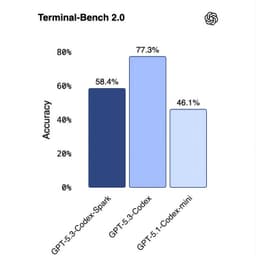
OpenAI’s Codex Spark running on Cerebras achieves >1000 tokens/sec at reduced context (128 tokens), enabling much lower-latency, interactive coding and assistant scenarios while higher-capability models remain on heavier hardware. Having distinct inference-optimized variants changes product architecture decisions: teams can serve fast, cheaper models for real-time UX while routing high-quality or safety-critical requests to larger instances.
- 03
Generative video and multi-input media models are rapidly improving and have implications beyond content creation.
ByteDance’s Seedance 2.0 and similar advances produce highly realistic, multi-scene videos from mixed inputs (text, images, clips, audio), which not only democratizes media production but also supplies rich simulated data for training agents and robotics. High-fidelity, consistent simulations accelerate agent/world-model learning and let researchers expose models to rare OOD scenarios without expensive real-world collection.
- 04
Small, targeted adapters can capture most reasoning gains with minimal parameters.
Tiny LoRA shows that extremely small low-rank adaptation layers (on the order of ~13 parameters in the presented example) can reproduce ~90% of reasoning improvements for an instruct-tuned model. This finding implies dramatically lower costs for fine-tuning, easier distributed deployment of task adapters, and supports the view that many fine-tuning gains elicit latent capabilities rather than creating them from scratch.
- 05
Evaluation, safety documentation, and heterogeneous eval setups complicate direct model comparisons.
Big benchmark jumps—like Gemini 3 Deep Think’s ARC-AGI-2 score—are impressive but entangled with differences in eval methodology, prompt engineering, context windows, and possible eval-awareness. Without standardized system cards and shared evaluation protocols, rankings can be noisy and may hide important differences in safety, robustness, and real-world behavior.
- 06
Training agents via diverse, random interactions to learn world models improves sample efficiency for downstream RL.
Rather than relying on rare successful trajectories, collecting varied state-action-next-state transitions—even from poor policies—enables models to learn environment dynamics and later optimize for reward more efficiently. This approach leverages abundant unsupervised signal in transitional data and reduces the need for brittle, hand-crafted demonstrations in RL for LLM agents.
Also in this issue
Decoder with Nilay Patel
Let's talk about Ring, lost dogs, and the surveillance state
The Twenty Minute VC (20VC): Venture Capital | Startup Funding | The Pitch
20VC: SaaS is Dead: Why Systems of Record Will Die in an Agentic World | What Revenue Multiple Will Software Companies Trade At? | From 7,000 to 3,000: We Need Less People Than Ever with Sebastian Siemiatkowski

20VC: SaaS is Dead: Why Systems of Record Will Die in an Agentic World | What Revenue Multiple Will Software Companies Trade At? | From 7,000 to 3,000: We Need Less People Than Ever with Sebastian Siemiatkowski
The Twenty Minute VC (20VC): Venture Capital | Startup Funding | The Pitch by The Twenty Minute VC · 87 min
Listen to episode →The episode centers on how AI—especially agentic systems and large language models—is collapsing the marginal cost of software creation and eroding traditional SaaS moats by lowering data switching costs. Sebastian explains why companies must build deep, contextual AI (Klarna’s in-house customer service that replaced ~600 agents) rather than rely on off-the-shelf solutions, and how that drove productivity gains and a headcount reduction from ~7,000 to ~3,000. The conversation covers implications for valuations and revenue multiples in software, the strategic choices around BNPL versus revolving credit, and competitive dynamics with fintech challengers like Revolut and Nubank. Anecdotes on fundraising (winning Sequoia and Michael Moritz) and a call for investors and CEOs to
Key Takeaways
Questions answered in this issue
What prompted Ring to cancel its partnership with Flock Safety?
Ring announced the planned Flock integration required more time and resources than anticipated and said the integration never launched; the cancellation followed intense public scrutiny about Flock's data being accessed by federal agencies.
How does Ring justify using AI in neighborhood camera networks?
Jamie Siminoff frames AI as a 'co-pilot' that reduces noisy motion alerts into meaningful anomaly detection and neighborhood intelligence, arguing this can improve safety and coordination among neighbors and public service agencies.
What is the practical importance of a 1M-token context window in Opus 4.6?
A 1M-token context window allows the model to process extremely long documents, large codebases, or multi-scene video/story prompts without compaction, reducing the need to chunk or summarize data and enabling end-to-end reasoning across long inputs.
How does Codex Spark (Cerebras) change deployment trade-offs for OpenAI?
Codex Spark offers much faster inference (1000+ tokens/sec) at reduced context (128 tokens) and capability compared to the full Codex 5.3, enabling low-latency, interactive use-cases while OpenAI retains high-capability models on other hardware (NVIDIA) for quality-sensitive workloads.
Why is data portability the next major threat to SaaS incumbents?
SaaS incumbents rely on data lock-in via proprietary data models; once AI agents can automate extraction, transformation and migration of that data (OneClick style), switching friction drops and moats shrink.
Why did Klarna build its own AI customer service rather than buy an off-the-shelf solution?
Because high-quality answers require deep context (including source code and internal business logic) that off-the-shelf products couldn't supply; embedding AI into the tech stack gave Klarna the context and control needed for better outcomes.