AI Agents Are Rebooting the SaaS Playbook
Issue
AI Agents Are Rebooting the SaaS Playbook
Distilling Deep AI Insights from Leading Podcasts

The most successful AI company you’ve never heard of | Qasar Younis
Lenny's Podcast: Product | Growth | Career by Lenny Rachitsky · 84 min
Listen to episode →Qasar Younis discusses Applied Intuition’s mission to add intelligence to heavy machinery and vehicles, arguing that the next wave of impactful AI will be in physical industries like farming, mining, construction, and trucking rather than consumer software. He contrasts technical approaches to autonomy (Waymo-style high-sensor/HD-map vs. Tesla-style generalization) and explains why autonomy will meaningfully reduce injuries and improve productivity. Qasar explains Applied Intuition’s deliberate low-profile build strategy, company values (speed, follow-through, customer-first), and how to create a culture where the best idea wins. He also covers broader themes: how to reduce fear of AI by understanding its limits, why many China vs. U.S. comparisons are misleading, and the importance of reading widely to develop judgment and product taste.
Key Takeaways
- 01
Physical AI will drive near-term, high-impact change in industries with large machines and clear unmet needs.
Adding autonomy to tractors, mining trucks, construction equipment, and long-haul trucks is incremental from an engineering perspective and delivers immediate safety and productivity gains. These sectors have aging workforces, dangerous tasks, and concentrated assets where solutions can be deployed and measured quickly — making them prime targets for Applied Intuition–style software that layers intelligence onto existing hardware.
- 02
Two viable autonomy architectures will coexist: sensor-rich, map-heavy systems and sensor-light, generalization-first systems.
Qasar frames autonomy as a spectrum: Waymo-style systems use many sensors, compute, and HD maps optimized for constrained geographies, while Tesla-style systems use cheaper sensors and rely on generalization without high-fidelity maps. Both approaches have trade-offs in cost, coverage, and engineering complexity, and both will find product-market fit across different vehicle classes and operational domains.
- 03
Understanding AI’s limitations is the best antidote to fear and enables constructive policy and product choices.
Qasar argues that fear often stems from misunderstanding; watching demos and learning where systems fail demystifies capabilities and exposes realistic timelines and failure modes. This grounded view helps stakeholders design safer deployments, prioritize human-in-the-loop constraints, and make policy choices that balance innovation with worker protections.
- 04
Company culture and operating values (speed, follow-up, customer obsession) are decisive in building high-impact AI products.
Applied Intuition emphasizes 'move fast, move safe,' relentless follow-through, and creating psychological safety so dissenting views surface and the best ideas win. These cultural practices reduce decision paralysis, enable rapid iteration on complex systems, and align engineering execution with customer outcomes — critical when building safety-critical autonomy software.
- 05
Strategic stealth can benefit deep-technology startups, but visibility is a tool that must be used pragmatically.
Applied Intuition intentionally stayed quiet to focus on product and customers, which helped them build durable technical advantage; however, Qasar cautions that this approach isn’t universally advisable because many founders need publicity for recruiting, fundraising, or ecosystem development. Founders should apply 'radical pragmatism' — choose visibility based on network strength, capital needs, and recruiting channels.
Also in this issue
The AI Daily Brief (Formerly The AI Breakdown): Artificial Intelligence News and Analysis
10 OpenClaw Lessons for Building Agent Teams
The Twenty Minute VC (20VC): Venture Capital | Startup Funding | The Pitch
20VC: Why the SaaS Apocalypse is BS | Why China Will Win the AI War | Why 50% of VCs Should Not Exist and are Tourists | Why Stock-Based Comp is the Hidden Sin of the Valley with Mitchell Green, Lead Edge Capital
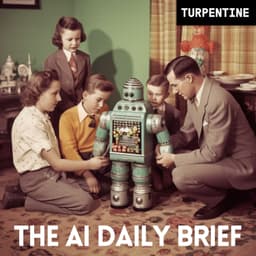
10 OpenClaw Lessons for Building Agent Teams
The AI Daily Brief (Formerly The AI Breakdown): Artificial Intelligence News and Analysis by Nathaniel Whittemore · 29 min
Listen to episode →The episode distills ten practical lessons from early OpenClaw users about building agent teams, emphasizing deliberate design around task separation, coordination, security, memory, and cost management. Guests report that single-purpose agents outperform monolithic multitask agents, and that simple file-based handoffs (Markdown/JSON) are often a robust coordination mechanism. Security practices frame agents as separate employees with isolated environments, scoped credentials, and limited access to sensitive systems. The discussion also highlights the need for explicit memory systems (agents start stateless), and the importance of right-sizing model choice to reserve expensive models for high-value tasks while using cheaper models for monitoring and scheduling.
Key Takeaways
- 01
Prefer one agent per task rather than a single multitasking agent.
Specialized agents maintain focused context, reduce cognitive overload, and produce higher-quality outputs; teams reported regaining performance when splitting a failing monolithic agent into multiple single-purpose agents. This approach simplifies debugging, testing, and incremental improvements because each agent has a narrow responsibility and predictable behavior.
- 02
Coordinate agents using simple, file-based handoffs (structured JSON + human-readable Markdown).
Files act as a reliable source-of-truth that avoid API rate limits, auth complexity, and orchestration fragility — agents write structured JSON for machine consumption and Markdown for human review or downstream agents. This low-tech pattern reduces infrastructure complexity and improves observability and recoverability of workflows.
- 03
Treat agents like separate employees and isolate their environments for security.
Give agents scoped API keys, separate machines/accounts, and explicitly forward only the data they need to prevent accidental leaks or escalations. This operational pattern reduces risk by making access boundaries explicit and simplifies incident response (revoke one agent's credentials without affecting others).
- 04
Design explicit memory systems — do not assume persistent context across sessions.
Agents typically start stateless, so builders must design storage, retrieval, and summarization mechanisms for long-term context to enable coherent multi-step work. Explicit memory lets teams control relevance, privacy, and cost of stored data and avoids silent failures due to missing context.
- 05
Right-size model selection to balance capability and cost.
Use cheaper models for routine monitoring, health checks, and scheduling tasks, and reserve more capable (and expensive) models for creative writing, judgment, and research. This tiered approach preserves budget while ensuring high-quality outputs where it matters most and supports predictable cost management.
- 06
Keep agent orchestration and observability simple to improve reliability and governance.
Favor observable, auditable patterns (files, logs, clear summaries) over complex orchestration layers that introduce failure modes and governance challenges. Simplicity aids enterprise adoption by making it easier to audit behavior, enforce policies, and onboard stakeholders who must trust the system.
Also in this issue
Lenny's Podcast: Product | Growth | Career
The most successful AI company you’ve never heard of | Qasar Younis
The Twenty Minute VC (20VC): Venture Capital | Startup Funding | The Pitch
20VC: Why the SaaS Apocalypse is BS | Why China Will Win the AI War | Why 50% of VCs Should Not Exist and are Tourists | Why Stock-Based Comp is the Hidden Sin of the Valley with Mitchell Green, Lead Edge Capital

20VC: Why the SaaS Apocalypse is BS | Why China Will Win the AI War | Why 50% of VCs Should Not Exist and are Tourists | Why Stock-Based Comp is the Hidden Sin of the Valley with Mitchell Green, Lead Edge Capital
The Twenty Minute VC (20VC): Venture Capital | Startup Funding | The Pitch by The Twenty Minute VC · 60 min
Listen to episode →The episode is a wide-ranging discussion of modern venture and growth investing, arguing that the so-called SaaS apocalypse is overblown and many incumbent enterprise software vendors will adapt rather than vanish. Mitchell Green warns that a large share of investors add little or negative value, and growth funds must be disciplined about fund math, exits, and selling. He calls out stock-based compensation dilution as an under-discussed structural problem that distorts startup economics and public/private valuation gaps. The conversation also highlights China — and ByteDance specifically — as a material AI competitor, and emphasizes Gross Dollar Retention as the single most predictive SaaS health metric for investors.
Key Takeaways
- 01
There are too many investors in venture/alternatives and many add negative value.
Mitchell estimates that roughly 50% of people in the industry are 'tourists' who do not add meaningful help to portfolio companies. This matters because oversized or unfocused fund populations dilute deal quality, increase competition for limited high-return opportunities, and make it harder for founders to find genuinely additive partners — ultimately degrading returns and elevating risk for LPs.
- 02
Incumbent enterprise software companies are unlikely to be wiped out by AI; many will adapt and thrive.
Large incumbents (e.g., Oracle, SAP) have distribution, balance sheets, customer relationships and data moats that let them invest in AI and pursue strategic M&A. For investors this means looking for durable economics and high operational metrics rather than assuming disruption equals extinction; AI is an amplifier but not an automatic death sentence for profitable, well-retained vendors.
- 03
China, led by players like ByteDance, is a serious contender to lead in AI capability and applications.
The podcast argues ByteDance is among the most advanced AI companies globally, reflecting China's massive data scale, engineering talent, and rapid product iteration. Investors should treat Chinese AI progress as a strategic competitive risk/opportunity — it affects talent flows, model development, go-to-market dynamics, and where capital should be allocated across geographies and architectures.
- 04
Stock-based compensation (equity dilution) is a hidden systemic problem that inflates nominal valuations and distorts economics.
Generous equity grants and continuous dilution create 'dead money' that masks true per-share economics, making companies look more valuable on headline metrics than they are for public shareholders or later-stage investors. Recognizing SBC impacts cap tables, unit economics, and eventual public-market performance should change diligence, board oversight, and founder incentives.
- 05
Gross Dollar Retention (GDR) is the single most important SaaS metric for predicting durable growth and capital efficiency.
GDR isolates retention excluding expansion, so thresholds (≈90% good, 95% great, 98% amazing) strongly predict churn risk and the stability of recurring revenue. Investors should prioritize GDR over net retention for underwriting and benchmarking because it reveals the underlying health of the core revenue base and dictates how much capital is needed to sustain growth.
- 06
Growth funds need public-exit-minded founders and flexibility to access public equities to execute fund-level returns.
Mitchell prefers backing entrepreneurs intending to go public because public currency enables large M&A and provides clearer liquidity pathways; many growth funds also miss opportunities by not buying publics inside their funds. For limited partners and fund managers, aligning exit expectations and having the capability to invest across private/public can materially improve DPI and reduce tail risk in large funds.
Questions answered in this issue
Why does Qasar think physical AI will matter more in industries like farming and mining over the next 5–10 years?
These industries already have large, specialized machines and clear unmet needs (aging workforces, dangerous jobs) where adding autonomy is incremental and high-impact; the engineering baseline exists, so intelligence can be layered on to generate immediate safety and productivity gains.
What are the two simplified technical approaches to self-driving Qasar describes?
A Waymo-style approach: many sensors, lots of compute, HD maps, good for constrained geography; and a Tesla-style approach: fewer/cheaper sensors, no high-fidelity maps, relying on generalization. Both will coexist and become more ubiquitous.
Why is 'one agent per task' recommended over single monolithic agents?
Single agents handling many responsibilities suffer context saturation and quality degradation; dedicated agents keep focused context, produce higher-quality outputs, and simplify debugging and coordination. The podcast cites a builder who replaced one agent with six specialized agents and regained quality.
How can teams coordinate multiple agents without complex orchestration systems?
Use a simple file-based workflow: agents write structured JSON as the source of truth and human-readable Markdown summaries for downstream agents to read. Files avoid crashes, auth/rate-limit complications, and provide reliable handoffs.
Will incumbent enterprise software companies be wiped out by AI?
No — incumbents often have distribution, data, profitable balance sheets and can both adapt and invest; some will fail but many will innovate and grow. Investors should pick incumbents with strong economics and high gross dollar retention.
Why is gross dollar retention more important than net retention?
GDR measures revenue retained from the same customers without upsells, exposing churn risk; Mitchell says thresholds (90% good, 95% great, 98% amazing) strongly predict durable growth and capital efficiency.