Can Founders Keep Up With AI?
Issue
Can Founders Keep Up With AI?
Distilling Deep AI Insights from Leading Podcasts
#235 - Opus 4.6, GPT-5.3-codex, Seedance 2.0, GLM-5
Last Week in AI by Skynet Today · 90 min
Listen to episode →The episode surveys major AI product and research news, emphasizing a wave of capability and infrastructure advances across large models, generative media, and open-weight competitors. Hosts highlight Anthropic’s Opus 4.6 with a 1M-token context window and agent-team features, OpenAI’s GPT-5.3 Codex plus a low-latency Codex Spark on Cerebras, and Google’s Gemini 3 Deep Think which posts large benchmark gains amid sparse safety documentation. Significant progress in generative media is covered—ByteDance’s Seedance 2.0, Seedream 5.0, Alibaba’s Qwen Image 2.0, and xAI’s Grok Imagine API push text/image-to-video realism and multi-input prompting. The episode also discusses ecosystem dynamics: open and hybrid releases (GLM-5, Qwen3 Coder Next, DeepSeek), adapter efficiency (Tiny LoRA), reinforcement-style world-model learning for agents, and the security and evaluation challenges that accompany rapid rollout.
Key Takeaways
- 01
Very large context windows are becoming a practical differentiator for long-form reasoning and multi-scene inputs.
Anthropic’s Opus 4.6 with a 1M-token context window reduces the need to chunk or compress long documents, codebases, or multi-scene video prompts, enabling end-to-end reasoning across extensive inputs. This matters for applications like legal review, large-code refactors, and embodied/simulated agent workflows where preserving long-range context improves coherence and reduces engineering complexity.
- 02
Latency-optimized model variants shift deployment trade-offs toward interactive use-cases.
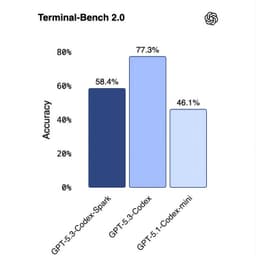
OpenAI’s Codex Spark running on Cerebras achieves >1000 tokens/sec at reduced context (128 tokens), enabling much lower-latency, interactive coding and assistant scenarios while higher-capability models remain on heavier hardware. Having distinct inference-optimized variants changes product architecture decisions: teams can serve fast, cheaper models for real-time UX while routing high-quality or safety-critical requests to larger instances.
- 03
Generative video and multi-input media models are rapidly improving and have implications beyond content creation.
ByteDance’s Seedance 2.0 and similar advances produce highly realistic, multi-scene videos from mixed inputs (text, images, clips, audio), which not only democratizes media production but also supplies rich simulated data for training agents and robotics. High-fidelity, consistent simulations accelerate agent/world-model learning and let researchers expose models to rare OOD scenarios without expensive real-world collection.
- 04
Small, targeted adapters can capture most reasoning gains with minimal parameters.
Tiny LoRA shows that extremely small low-rank adaptation layers (on the order of ~13 parameters in the presented example) can reproduce ~90% of reasoning improvements for an instruct-tuned model. This finding implies dramatically lower costs for fine-tuning, easier distributed deployment of task adapters, and supports the view that many fine-tuning gains elicit latent capabilities rather than creating them from scratch.
- 05
Evaluation, safety documentation, and heterogeneous eval setups complicate direct model comparisons.
Big benchmark jumps—like Gemini 3 Deep Think’s ARC-AGI-2 score—are impressive but entangled with differences in eval methodology, prompt engineering, context windows, and possible eval-awareness. Without standardized system cards and shared evaluation protocols, rankings can be noisy and may hide important differences in safety, robustness, and real-world behavior.
- 06
Training agents via diverse, random interactions to learn world models improves sample efficiency for downstream RL.
Rather than relying on rare successful trajectories, collecting varied state-action-next-state transitions—even from poor policies—enables models to learn environment dynamics and later optimize for reward more efficiently. This approach leverages abundant unsupervised signal in transitional data and reduces the need for brittle, hand-crafted demonstrations in RL for LLM agents.

Sequoia CEO coach: Why it’s never been easier to start a company, and never been harder to scale one | Brian Halligan (co-founder, HubSpot)
Lenny's Podcast: Product | Growth | Career by Lenny Rachitsky · 74 min
Listen to episode →Brian Halligan argues that while it has never been easier to start a company thanks to low friction (tools, capital, talent), scaling a durable, high-impact organization has become harder and requires a different skill set. The CEO role now demands faster, higher-quality decision-making because increased optionality and rapid iteration create a cognitive tax on choices. Halligan emphasizes hiring and team design as the central scaling levers—promoting homegrown talent, favoring "spikier" candidates, using interactive interviews and blind references, and adopting a hire-slow/fire-fast mentality. He shares Sequoia’s LOCKS framework for evaluating founders (Lovable, Obsession, Chip, Knowledgeable, Student), practical coaching habits, and his view that AI will augment but not immediately replace core enterprise sales motions.
Key Takeaways
- 01
Starting a company is easier than ever, but building lasting scale is harder.
Lower barriers (cloud infra, marketplaces, funding, remote talent) mean many more companies will get launched, increasing competition and making differentiation more difficult. Founders must therefore design companies for durability—organizational design, hiring, and repeatable go-to-market—rather than treating launch as the main challenge.
- 02
The modern CEO must make faster, better decisions because speed and optionality increase the decision tax.
With rapid experimentation enabled by modern tooling and AI, leaders face many more forks in the road; bad prioritization or slow tradeoffs lead to strategic drift. This raises the value of coaching, clear decision processes (DRI ownership), and rituals that reduce noise and surface real tradeoffs.
- 03
Hiring and team composition are the primary determinants of scaling success.
Moving from sub-100 to 100+ employees shifts the battle from product-market fit to building an executive team and org design that can scale. Tactical practices Halligan recommends—interactive/problem-based interviews, blind reference questions (e.g., "Would you hire them again on a 1–10 scale?"), smaller interview panels, and prioritizing 'spikier' candidates—improve hit rates and reduce executive turnover.
- 04
Promote homegrown talent and supplement with a few strategic experienced hires (the '2004 Red Sox' model).
Internal hires bring cultural fit, institutional knowledge, and often outperform external big-company recruits who suffer expectation mismatches. The right mix reduces attrition risk and aligns incentives while selectively adding outside leaders to fill capability gaps.
- 05
Use structured, pointed reference checks and interactive evaluation to surface real candidate performance.
Generic reference conversations and resume walkthroughs are low-signal; forced-choice questions and live work samples reveal true capability and tradeoffs. These techniques are practical levers to reduce hiring mistakes—especially at the executive level, where turnover is costly.
- 06
AI will augment go-to-market (avatars, agents, CRM augmentation) but is unlikely to immediately replace enterprise sales.
Halligan predicts buyers and agent-driven discovery will reshape top-of-funnel UX (agent-avatared homepages, personalized agent interactions), and tools like embedded LLMs will scale personalized support and product Q&A. However, complex enterprise motions—implementation, relationship-driven negotiations, and trust—will keep many sales roles human-led for the near term.
Also in this issue
Questions answered in this issue
What is the practical importance of a 1M-token context window in Opus 4.6?
A 1M-token context window allows the model to process extremely long documents, large codebases, or multi-scene video/story prompts without compaction, reducing the need to chunk or summarize data and enabling end-to-end reasoning across long inputs.
How does Codex Spark (Cerebras) change deployment trade-offs for OpenAI?
Codex Spark offers much faster inference (1000+ tokens/sec) at reduced context (128 tokens) and capability compared to the full Codex 5.3, enabling low-latency, interactive use-cases while OpenAI retains high-capability models on other hardware (NVIDIA) for quality-sensitive workloads.
Why does Halligan say starting companies will mushroom over the next decade?
Because barriers to starting (tools, platforms, capital, talent desire) are lower, making it easier for more people to found companies; the challenge will be standing out and scaling effectively.
What change in CEO responsibilities is emphasized for today's fast-moving environment?
CEOs must be faster and better decision-makers due to higher optionality and speed of experiments; that creates pressure to prioritize well and act quickly.