Open-Source Agents Turn AI Into Productivity Infrastructure
Issue
Open-Source Agents Turn AI Into Productivity Infrastructure
Distilling Deep AI Insights from Leading Podcasts
The AI Productivity Boom Finally Shows Up
The AI Daily Brief (Formerly The AI Breakdown): Artificial Intelligence News and Analysis by Nathaniel Whittemore · 26 min
Listen to episode →The episode examines signs that AI is beginning to show measurable macroeconomic effects, driven by revised labor data that imply an unexpectedly large productivity uptick for 2025. It covers policy tensions highlighted by Anthropic's dispute with the Pentagon over permissible military uses of models, and competitive moves in the model race, notably Alibaba's Qwen 3.5 Plus with large-scale multimodal capabilities and aggressive pricing. The hosts discuss the unsettled but increasingly empirical debate over AI-driven job displacement, noting slower hiring in AI-exposed roles but emphasizing confounders and the need for better data. Broader industry developments — from Hollywood's AI concerns to Apple’s teased hardware event — are used to illustrate the transition from experimentation to structural utility for AI technologies.
Key Takeaways
- 01
Revised labor statistics suggest a material productivity increase that some economists attribute to AI.
A Bureau of Labor Statistics revision removed roughly 400,000 jobs from 2025 counts while GDP stayed strong, implying higher output per worker and an estimated ~2.7% productivity growth. If persistent and causally linked to AI adoption, this shift would mark a transition from anecdotal gains to measurable macroeconomic impact, though alternative explanations and the need for careful causal analysis remain.
- 02
The Anthropic–Pentagon conflict highlights who gets to set permissible military uses of large models.
Anthropic enforces use restrictions (no facilitation of violence, weapons, surveillance) while the Pentagon expects contractor tools to be available for lawful military purposes, leading to reviews and threats of blacklisting. This dispute underscores tensions between vendor ethics/policy controls and government operational requirements, with implications for procurement, classified use, and broader governance of AI capabilities.
- 03
Chinese labs are advancing large multimodal models and competing on price and scale.
Alibaba’s Qwen 3.5 Plus, a 397B-parameter Mixture-of-Experts model with a 1M token context window and native multimodal reasoning, demonstrates significant capability growth at lower cloud-serving prices. Aggressive pricing (e.g., $1.2 per million input tokens) and technical choices like Mixture-of-Experts architectures make these offerings attractive to cost-sensitive customers and accelerate global competition in model deployment.
- 04
Evidence on AI-driven job displacement is emerging but not yet definitive.
Studies show hiring slowdowns in AI-exposed occupations—particularly entry-level roles—but confounding factors like interest-rate effects, sectoral shifts, and statistical revisions complicate causal claims. Researchers call for more granular, controlled analyses (e.g., firm-level, task-level) to separate AI effects from broader macroeconomic influences and to understand which roles are most structurally affected.
- 05
We may be moving from an era of AI experimentation to one of structural utility.
Quotes and data in the episode suggest AI is moving beyond pilots into deployments that change workflows and output, which could produce measurable productivity gains at scale. This shift increases focus on governance, standards, and infrastructure (hardware like Apple’s upcoming chips, cloud-serving economics, and agent/tooling ecosystems such as Claw) needed to sustain secure, productive adoption.
OpenClaw Goes to OpenAI
The AI Daily Brief (Formerly The AI Breakdown): Artificial Intelligence News and Analysis by Nathaniel Whittemore · 30 min
Listen to episode →The episode explores OpenClaw’s rapid rise from a weekend experiment to a major open-source focal point and the implications of its founder joining OpenAI to work on personal agents. Hosts discuss a recent industry shift toward agentic systems, multi-agent orchestration, and the ways task-specialized models (especially coding models) and execution frameworks are becoming differentiators. The headlines cover speed-optimized coding models like GPT-5.3 Codex Spark and claims of ~1,000 tokens/sec throughput, hardware diversity (non-NVIDIA and wafer-scale chips), and vendor moves from Google/DeepMind and Anthropic. Throughout, tensions emerge between openness and consolidation, speed versus capability trade-offs, and the business implications of large funding and productization decisions.
Key Takeaways
- 01
OpenClaw became a community Schelling point by lowering the bar for prototyping agentic systems.
OpenClaw’s rapid open-source growth and accessible tooling attracted builders and sped experimentation, making it a natural hub for agents and integrations. That community momentum matters because it accelerates iteration, surfaces practical use cases, and influences where talent and attention flow—factors that shift the balance between open ecosystems and proprietary labs.
- 02
Speed-optimized coding models are reshaping developer workflows but introduce clear capability trade-offs.
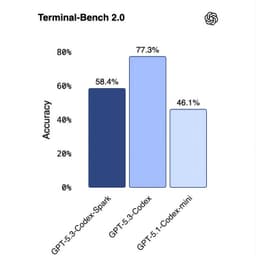
Models like Codex Spark prioritize inference throughput (claims near 1,000 tokens/sec) to keep developers 'in the flow' and act as real-time pair programmers, enabling large code and summary generation in seconds. The significance is pragmatic: latency improvements boost productivity, but extreme optimization can degrade quality on multimodal inputs, long-horizon reasoning, or nuanced tasks, forcing teams to choose model variants by use case.
- 03
Hardware-software coupling and vendor-specific deployments are increasing, raising lock-in concerns.
Some models are being served on non-NVIDIA stacks or vendor wafer-scale chips, signaling strategic hardware diversification and tighter coupling between model design and execution platforms. This matters because exclusive hardware choices can yield performance gains but also create portability constraints and vendor lock‑in that affect startups and enterprises planning infrastructure and portability.
- 04
The next competitive front is orchestration and execution—agents, connectors, and tool frameworks—not just raw model benchmarks.
Speakers emphasized agent orchestration, plugins, MCP connectors, and execution frameworks as the systems that let multiple agents and tools coordinate, which will determine real-world value. This shift is significant because a well-designed orchestration layer can multiply utility beyond any single model’s capabilities, making systems engineering, UX, and integration expertise critical differentiators.
- 05
Commercialization and funding dynamics are reshaping product signals and strategic narratives.
Discussions about Anthropic’s funding, Claude Code revenue, and founder moves (e.g., OpenClaw → OpenAI) highlight tensions between community openness and commercial incentives. These factors matter for where R&D and product roadmaps go next—large raises and profitable product lines can accelerate proprietary feature builds and influence market expectations about enterprise-grade agent deployments.
- 06
Agentic features are migrating into domain-focused models, creating a debate over specialization versus autonomy.
Vendors like Google/DeepMind are embedding agentic capabilities into models that previously had narrow domain focus, blurring lines between specialized models and autonomous multi-step agents. The significance is practical: combining domain expertise with agentic autonomy can unlock powerful applications (e.g., voice interview agents, enterprise automation), but it raises UX, safety, and reliability questions about when and how agents should act autonomously.
#235 - Opus 4.6, GPT-5.3-codex, Seedance 2.0, GLM-5
Last Week in AI by Skynet Today · 90 min
Listen to episode →The episode surveys major AI product and research news, emphasizing a wave of capability and infrastructure advances across large models, generative media, and open-weight competitors. Hosts highlight Anthropic’s Opus 4.6 with a 1M-token context window and agent-team features, OpenAI’s GPT-5.3 Codex plus a low-latency Codex Spark on Cerebras, and Google’s Gemini 3 Deep Think which posts large benchmark gains amid sparse safety documentation. Significant progress in generative media is covered—ByteDance’s Seedance 2.0, Seedream 5.0, Alibaba’s Qwen Image 2.0, and xAI’s Grok Imagine API push text/image-to-video realism and multi-input prompting. The episode also discusses ecosystem dynamics: open and hybrid releases (GLM-5, Qwen3 Coder Next, DeepSeek), adapter efficiency (Tiny LoRA), reinforcement-style world-model learning for agents, and the security and evaluation challenges that accompany rapid rollout.
Key Takeaways
- 01
Very large context windows are becoming a practical differentiator for long-form reasoning and multi-scene inputs.
Anthropic’s Opus 4.6 with a 1M-token context window reduces the need to chunk or compress long documents, codebases, or multi-scene video prompts, enabling end-to-end reasoning across extensive inputs. This matters for applications like legal review, large-code refactors, and embodied/simulated agent workflows where preserving long-range context improves coherence and reduces engineering complexity.
- 02
Latency-optimized model variants shift deployment trade-offs toward interactive use-cases.
OpenAI’s Codex Spark running on Cerebras achieves >1000 tokens/sec at reduced context (128 tokens), enabling much lower-latency, interactive coding and assistant scenarios while higher-capability models remain on heavier hardware. Having distinct inference-optimized variants changes product architecture decisions: teams can serve fast, cheaper models for real-time UX while routing high-quality or safety-critical requests to larger instances.
- 03
Generative video and multi-input media models are rapidly improving and have implications beyond content creation.
ByteDance’s Seedance 2.0 and similar advances produce highly realistic, multi-scene videos from mixed inputs (text, images, clips, audio), which not only democratizes media production but also supplies rich simulated data for training agents and robotics. High-fidelity, consistent simulations accelerate agent/world-model learning and let researchers expose models to rare OOD scenarios without expensive real-world collection.
- 04
Small, targeted adapters can capture most reasoning gains with minimal parameters.
Tiny LoRA shows that extremely small low-rank adaptation layers (on the order of ~13 parameters in the presented example) can reproduce ~90% of reasoning improvements for an instruct-tuned model. This finding implies dramatically lower costs for fine-tuning, easier distributed deployment of task adapters, and supports the view that many fine-tuning gains elicit latent capabilities rather than creating them from scratch.
- 05
Evaluation, safety documentation, and heterogeneous eval setups complicate direct model comparisons.
Big benchmark jumps—like Gemini 3 Deep Think’s ARC-AGI-2 score—are impressive but entangled with differences in eval methodology, prompt engineering, context windows, and possible eval-awareness. Without standardized system cards and shared evaluation protocols, rankings can be noisy and may hide important differences in safety, robustness, and real-world behavior.
- 06
Training agents via diverse, random interactions to learn world models improves sample efficiency for downstream RL.
Rather than relying on rare successful trajectories, collecting varied state-action-next-state transitions—even from poor policies—enables models to learn environment dynamics and later optimize for reward more efficiently. This approach leverages abundant unsupervised signal in transitional data and reduces the need for brittle, hand-crafted demonstrations in RL for LLM agents.
Questions answered in this issue
What data point led some economists to claim an AI-driven productivity boom for 2025?
A BLS revision removed roughly 400,000 jobs from 2025 job counts (reducing reported net job gains from ~584k to ~181k) while GDP growth remained strong (provisional Q4 ~3.7%, Atlanta Fed forecasts higher), implying higher output per worker and an estimated 2.7% productivity growth for the year.
What is the core of the Anthropic-Pentagon conflict?
Anthropic enforces model use restrictions (no facilitation of violence, weapons, surveillance), while the Pentagon expects contractor tools to be available for all lawful military purposes; alleged classified uses of Claude triggered a review and threats of blacklisting.
Which product is singled out as a major revenue driver for Anthropic?
Claude Code is highlighted as generating about $2.5 billion and having more than doubled in recent periods, marking it as a key revenue driver and demonstration of the value of coding models.
Why did OpenClaw become a Schelling point for builders according to the segment?
OpenClaw's rapid open-source growth, weekend experimentation origins, and visibility from executive testing (e.g., Satya Nadella) made it a focal point; community momentum and accessible agent tooling attracted builders looking to prototype agentic systems quickly.
What is the practical importance of a 1M-token context window in Opus 4.6?
A 1M-token context window allows the model to process extremely long documents, large codebases, or multi-scene video/story prompts without compaction, reducing the need to chunk or summarize data and enabling end-to-end reasoning across long inputs.
How does Codex Spark (Cerebras) change deployment trade-offs for OpenAI?
Codex Spark offers much faster inference (1000+ tokens/sec) at reduced context (128 tokens) and capability compared to the full Codex 5.3, enabling low-latency, interactive use-cases while OpenAI retains high-capability models on other hardware (NVIDIA) for quality-sensitive workloads.