Enterprise Evolution: How Workday & Salesforce Are Reshaping SaaS with AI
Issue
Enterprise Evolution: How Workday & Salesforce Are Reshaping SaaS with AI
Distilling Deep AI Insights from Leading Podcasts
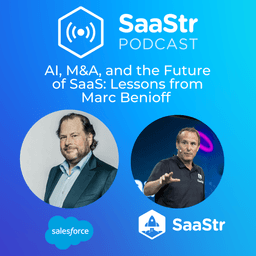
SaaStr 801: AI, M&A, and the Future of SaaS: Lessons from Marc Benioff, Chair, CEO & Co-Founder of Salesforce
The Official SaaStr Podcast: SaaS | Founders | Investors by SaaStr · 47 min
Listen to episode →In this insightful episode of SaaStr, Jason Lemkin interviews Marc Benioff, the Chair, CEO, and Co-Founder of Salesforce, exploring the integration of AI, the company's acquisition strategy, and the future of SaaS. Benioff reveals a paradigm shift where CEOs and executives now collaborate closely with AI agents as strategic partners, particularly highlighting how AI is embedded into Salesforce's executive planning processes like V2 MOM. The discussion delves into Salesforce's strategic acquisitions of iconic companies such as Tableau and Slack, emphasizing the importance of not only the technology but also the communities and ecosystems these brands cultivate. Benioff underscores the transition of analytics from niche, analyst-driven activities to AI-powered, democratized agentic analytics, expanding accessibility and real-time decision-making across enterprises. A key vision presented is Slack's evolution into a 'meta agent'—a centralized AI interface harmonizing workflows and data from Salesforce, Tableau, and beyond, aiming to minimize user friction and modal interruptions. The episode touches on the challenges of preserving founder DNA and culture post-acquisition, indicating that integration efforts must extend beyond product unification to ecosystem and community alignment. Benioff candidly addresses competitive dynamics, including Microsoft’s aggressive tactics against Slack and the nuanced relationship between OpenAI and Microsoft, highlighting both collaboration and competition. The conversation also addresses global business realities, referencing Japan’s demographic challenges pushing AI-driven workforce reductions. Additionally, Salesforce’s AI initiative 'Agent Force' is showcased as a rapidly expanded platform powering thousands of customers with AI automation in customer service and operations. The discussion closes with a balanced outlook on AI adoption timeline, the importance of embedding AI investments within business budgets, and Salesforce’s unique holistic approach combining technology, business models, and philanthropy to sustain long-term value and corporate responsibility.
Key Takeaways
- 01
Marc Benioff describes a fundamental shift in executive leadership as AI agents transition from tools to active collaborators within strategic workflows. He illustrates this by sharing how he co-authors Salesforce's V2 MOM plans alongside top executives and AI agents that provide novel insights and foresight. This reveals a new CEO role that integrates AI not just for efficiency but as a partner expanding human cognitive capabilities.
This is significant because it reframes how leadership functions in AI-driven enterprises, suggesting that future CEOs must become adept at managing human-AI synergy and trusting AI-derived insights. The concept of AI agents enhancing 'consciousness' and offering 'enlightenment' implies a cognitive augmentation role, moving AI beyond automation toward decision augmentation. For businesses, adopting this mindset early may foster competitive advantage, better strategic planning, and cultural readiness for AI integration. It also raises new challenges around ethics, governance, and trust in AI-generated recommendations at the highest organizational levels.
- 02
Salesforce’s acquisition strategy prioritizes iconic products with strong community engagement, as exemplified by Tableau and Slack. Rather than focusing solely on financial returns, these acquisitions aim to integrate ecosystems and user bases deeply into Salesforce’s platform, enhancing product adoption and engagement.
This approach signals mature M&A thinking in SaaS, recognizing that cultural and ecosystem alignment is as crucial as technology fit. Benioff emphasizes the vibrant Tableau user conference and Slack’s post-acquisition growth, which Salesforce catalyzed by altering distribution tactics and integrating AI capabilities. The vision is to create a seamless SaaS ecosystem where community-led growth harmonizes with AI-powered product evolution. For developers and businesses, this underscores the importance of ecosystem-oriented strategies for product development, strategic partnerships, and successful integrations.
- 03
The evolution of analytics into AI-powered 'agentic analytics' marks a transformative step, turning passive BI tools into interactive AI agents that engage users through natural language and embedded workflows. This democratizes data insights by removing reliance on specialized analysts and enabling broader organizational use.
This shift is critical as it aligns with the industry move towards instruction-tuned large language models and retrieval-augmented generation (RAG) that allow AI to interact seamlessly with enterprise data. Benioff highlights Tableau’s new AI platform that integrates apps, agents, and data, demonstrating how enterprises can now embed AI-driven intelligence in accessible formats. This democratization enhances decision speed, reduces bottlenecks, and fosters a culture of data-driven action, which is invaluable in today’s fast-paced business environment. Developers must focus on creating intuitive AI interfaces and ensuring data accessibility, while businesses should invest in AI-augmented analytics to stay competitive.
- 04
Slack is envisioned as a 'meta agent,' centralizing AI-driven collaboration by blending data and workflows across Salesforce, Tableau, and other platforms. The goal is to create a fluid, non-disruptive user experience where interactions with multiple enterprise systems converge seamlessly within Slack’s interface.
This represents an important trend in enterprise software where discrete applications are unified through intelligent, embedded AI assistants, reducing 'modal interruptions' and enhancing productivity. Benioff’s vision addresses core user experience challenges in complex, multi-application environments by proposing Slack as the AI-powered hub for work. Such meta-agent platforms signal a potential redefinition of digital workplaces, encouraging businesses to rethink application architectures and developers to innovate interoperability standards and deeply embedded AI workflows. However, this approach also raises questions about data privacy, interface complexity, and user adoption dynamics.
- 05
A persistent M&A challenge is preserving the founder DNA and culture of acquired companies, particularly at Salesforce with acquisitions like Slack where competitive pressures and integration complexities exist. Benioff acknowledges this difficulty and stresses managing these integrations carefully to maintain innovation and user trust.
This highlights a well-known but often underestimated risk in enterprise SaaS acquisitions—loss of entrepreneurial spirit can stagnate innovation and alienate communities. Management must balance operational integration with cultural respect, ensuring founders and communities feel valued beyond product ownership. Salesforce’s experience, including navigating regulatory scrutiny and Microsoft’s competitive tactics, illustrates the multifaceted nature of these challenges. Successfully addressing these issues is critical for sustained product growth, customer loyalty, and ecosystem health, impacting M&A strategies industry-wide.
- 06
Salesforce’s AI initiative 'Agent Force' exemplifies rapid, large-scale deployment of AI agents enabling thousands of customers to automate and optimize sales, service, and marketing interactions. This program demonstrates a successful transition from conceptual AI projects to operational enterprise tools with measurable outcomes.
Agent Force’s growth—from an idea one year ago to adoption by around 5,000 companies—shows that practical, well-integrated AI can deliver significant value quickly. Customers have reported benefits like up to 30% headcount reduction owing to AI automation, underscoring both productivity gains and cost efficiencies. This milestone counters skepticism about AI’s slow enterprise adoption and suggests that scalable AI agents are becoming cornerstone capabilities in SaaS solutions. Businesses aiming for competitive advantage should prioritize embedding AI assistants into core workflows, and developers must focus on creating robust, user-friendly AI platforms.
- 07
The competitive dynamics between OpenAI and Microsoft reveal a nuanced 'coopetition' model where partnership and competitiveness coexist. Notably, OpenAI’s disclosed technology stack excludes Microsoft Azure and Copilot, indicating a level of operational independence despite investment and collaboration ties.
This complexity illustrates evolving relationships in the AI ecosystem, where investing entities may also act as competitors or strategic rivals. It challenges assumptions about platform dominance and cloud provider collaboration, signaling that independence and selective integration are strategic tools in AI development. For startups, developers, and enterprises, understanding such dynamics is critical for choosing partnerships, technology stacks, and anticipating market direction. It also reflects broader trends of oligopoly cloud influence intersecting with innovative AI startups striving for autonomy.
- 08
Demographic shifts in markets like Japan, characterized by population decline, are accelerating AI and automation adoption as enterprises reduce workforce sizes and replace roles with AI agents. This socio-economic factor is driving AI usage as a business necessity beyond pure innovation.
Benioff’s conversation with Japanese executives reveals real-world pressure to maintain service capabilities amid shrinking human resources, resulting in planned annual workforce reductions offset by AI agent deployments. This scenario exemplifies how macroeconomic trends shape enterprise software demand and AI investment strategies, especially in mature markets facing labor shortages. Such realities demand that AI solutions not only innovate but also address efficiency and sustainability concerns. For technology providers, tailoring AI to local demographic and economic contexts will be essential for relevancy and adoption.
- 09
Despite accelerating AI adoption, Benioff cautions that many enterprises have yet to realize meaningful transformation, with most generative AI experiments over recent years falling short of substantial business change. He advocates for patience and long-term perspective on AI’s impact.
This tempered view counters hype by highlighting the ongoing maturation needed in AI technologies, organizational readiness, and integration approaches. It underscores the importance of incremental wins and pioneer case studies as foundations for broader adoption. The advice to manage expectations is crucial for leaders and startups to sustain investment, avoid disillusionment, and focus on strategic AI assimilation rather than chasing quick fixes. This realistic stance encourages building robust AI capabilities embedded into workflows and culture over time.
- 10
Salesforce is building a layered ecosystem model composed of apps, data, AI agents, and an emerging robotic layer, envisioned to operate as tightly integrated yet singular software, providing a coherent platform that scales AI-enabled enterprise workflows.
This architectural framework reflects the convergence of traditional SaaS applications with AI intelligence and physical automation via robotics. The integration of these layers signifies a future where digital and physical AI agents collaborate to provide seamless user experiences and operational efficiencies. For developers, this implies a need to design interoperable, modular components that can be unified into a consistent platform. Businesses must understand this multi-dimensional AI ecosystem as foundational to modern enterprise transformation, guiding investment and innovation priorities.

Workday CEO Carl Eschenbach: Building the System of Record for the AI Era
Training Data by Sequoia Capital · 47 min
Listen to episode →In this episode, Workday CEO Carl Eschenbach discusses the company’s strategic evolution to manage both human employees and AI agents as integrated parts of the enterprise workforce. He highlights the need to shift the AI adoption narrative within enterprises from short-term ROI and cost savings focus to one that emphasizes AI as a driver of sustainable business growth and innovation. Workday is transitioning its platform to become a unified system of record not only for people and financials but also for AI agents, onboarded and managed with the same rigor around identity, access, governance, and performance benchmarking. The company is leveraging its vast, curated dataset—covering over 70 million users and 30% of U.S. job requisitions—to power domain-specific AI agents that outperform general-purpose large language models in delivering actionable insights within HR and finance workflows. Workday has developed a robust monetization strategy reflecting the hybrid workforce model, employing seat-based pricing for humans, functionally tailored role-based AI agent pricing, and consumption-based billing for API interactions. Eschenbach acknowledges the critical challenges posed by AI agent governance, security, and compliance, drawing parallels to the shadow IT issues of the past and emphasizing the importance of the AI Gateway for secure onboarding. The episode also addresses common concerns about AI-driven job displacement, with Eschenbach rejecting dramatic workforce reductions and instead advocating for AI-human coexistence that augments employee productivity and enables a workforce skills revolution. Internal programs like ‘Everyday AI’ empower Workday’s 20,000 employees to adopt AI tools effectively. The company’s acquisition of specialized AI agent providers, such as recruiter agents that boost hiring efficiency, illustrates practical ROI in enterprise workflows. Finally, Eschenbach discusses the realities of enterprise AI sales as a top-down, relationship-driven process and cautions against opportunistic AI pricing, underscoring sustainable, value-aligned monetization as central to long-term customer trust and success.
Key Takeaways
- 01
Workday redefines itself as a system of record that manages a hybrid workforce of both humans and AI agents, integrating AI agents similarly to employees with governance, access control, and performance tracking.
This transformation is significant because it acknowledges AI agents as first-class participants in the enterprise workforce, requiring the same structured oversight traditionally given to human employees. Workday’s AI gateway serves as a secure, compliant entry point, managing agent identity and access to safeguard data and governance. By unifying human and digital worker management, enterprises gain comprehensive workforce visibility and capacity planning tools that reflect modern operational realities. This pioneering approach addresses the growing challenge of AI integration in enterprises, providing a scalable, trusted platform for hybrid labor management, which is increasingly critical given AI’s accelerating role in workflows.
- 02
The company emphasizes shifting the enterprise AI adoption conversation from a narrow ROI and cost-saving focus to a broader growth value proposition that fosters peaceful coexistence between human workers and AI agents.
Enterprises often initially view AI through the lens of immediate cost reduction, which can generate employee anxiety and resistance due to fears of job displacement. Workday advocates for reframing AI as a growth enabler—fueling reinvestment, innovation, and expansion—which aligns human and AI objectives toward collective productivity gains. This narrative shift is crucial to achieving sustainable adoption, as it builds employee confidence and promotes collaboration between humans and AI instead of competition. The approach supports evolving workforce dynamics characteristic of the AI era and mitigates cultural and morale risks inherent in transformation initiatives.
- 03
Workday’s AI monetization employs a three-pronged pricing strategy—seat-based pricing for human users, role-based pricing for AI agents customized to specific enterprise functions, and consumption-based pricing for API access to AI services.
This multifaceted pricing reflects the differentiated value delivery pathways of AI within an enterprise environment, where humans and AI agents serve distinct operational roles. Seat-based pricing maintains traditional licensing revenue for human users, while role-based agent pricing allows businesses to pay specifically for AI functionality aligned with precise job functions such as payroll or recruiting, enhancing transparency and fairness. Consumption-based API pricing accommodates variable demand and usage patterns for AI-enabled data services. Together, this pricing model aligns with modern SaaS and AI trends emphasizing flexibility and scalability, supporting enterprises in controlling costs and scaling AI investments appropriately.
- 04
Domain-specific AI agents powered by Workday’s vast, curated enterprise datasets outperform general-purpose large language models, providing actionable, contextually aware insights within business workflows.
Unlike broad-spectrum AI models, Workday’s role-based agents are trained with rich, curated data representing over 70 million users and a substantial share of U.S. job requisitions, enabling them to deliver precise, enterprise-relevant outputs. This specialization improves accuracy, trustworthiness, and integration within workflows, addressing a core challenge in enterprise AI deployment—ensuring outputs are meaningful and compliant. The architectural focus on curated data as a moat underpins a sustainable competitive advantage and facilitates building AI tools that heighten operational efficiency. For businesses and developers, this illustrates the critical importance of data quality and domain expertise in producing successful AI applications.
- 05
Effective governance and secure onboarding of AI agents pose critical challenges akin to the shadow IT problems of prior decades, necessitating robust identity, access control, and compliance frameworks.
As AI agents increasingly interact with sensitive enterprise data and systems autonomously, inadequate oversight may lead to security breaches, compliance failures, and data misuse. Workday’s AI gateway concept provides a centralized, controlled mechanism for onboarding agents, ensuring secure identity verification and governance policies are enforced. This approach is vital for building enterprise trust in AI deployments and preventing risks associated with unmanaged AI proliferation. It reflects a strategic focus on responsible AI integration, balancing agility with risk management—a pressing concern for enterprises facing regulatory scrutiny and evolving cybersecurity threats.
- 06
The AI-enabled workforce future involves hybrid management where AI agents augment human workers by automating repetitive or low-value tasks, facilitating employees’ focus on strategic, high-value activities.
Workday’s payroll agent example typifies this shift, autonomously handling administrative payroll tasks, thereby liberating human administrators for more impactful work. This symbiotic model recalibrates workforce roles instead of eliminating jobs, addressing common fears of displacement. It signals a broader workforce skills revolution, as employees upskill to collaborate effectively with AI agents. The coexistence model also promotes productivity uplift and innovation, crucial for enterprises adapting to rapid technological change. For workforce planners and HR leaders, it highlights the importance of rethinking talent development and organizational design in the AI era.
- 07
Enterprise AI sales are predominantly a top-down process that requires engagement with senior leaders such as CIOs and department heads, contrasting with product-led growth models common in consumer markets.
This sales reality stems from the complexity and risk inherent in enterprise technology adoption, which demands alignment with organizational strategies, budgets, and compliance standards. As a result, AI vendors must maintain sophisticated sales motions involving trusted relationships and tailored solutions rather than relying on viral user adoption or self-service models. This recognition informs go-to-market strategies for AI startups and vendors targeting enterprises, emphasizing human-driven relationships and long sales cycles. It also signals challenges for product design teams needing to balance ease of use with enterprise-grade features and integrations.
- 08
Workday advocates embedding AI co-pilots as foundational, integrated product features rather than bolt-ons, promoting a value-aligned subscription pricing model instead of opportunistic price increases.
While some peers rapidly raised prices following AI feature launches, Workday’s philosophy centers on sustainable customer relationships and pricing that reflects the actual value delivered. This customer-first approach mitigates backlash and supports long-term adoption, fostering trust in AI enhancements. Embedding AI deeply within products ensures seamless experiences and continuous innovation without fragmenting offerings. For enterprises, this means predictable costs linked to measurable benefits, reducing friction in AI adoption and enhancing satisfaction.
- 09
Workday’s internal ‘Everyday AI’ training program empowers employees to adopt AI effectively, fostering a skills revolution that prepares its workforce for AI-augmented workflows.
Recognizing that employee readiness is core to successful AI transformation, Workday invests in education and practical skill development. The ‘Everyday AI’ curriculum teaches staff how to use AI tools, assess their capabilities, and integrate AI into daily work responsibly. This initiative alleviates common adoption barriers such as fear, uncertainty, or resistance by building confidence and competence. It is illustrative of best practices in enterprise AI deployment emphasizing human-centric change management and workforce transformation. This strategy can enhance productivity and employee engagement, ultimately supporting AI’s business value realization.
- 10
AI-driven talent matching and internal mobility solutions by Workday reduce employee attrition by up to 40% by aligning skills, experience, and projects to foster growth opportunities within organizations.
By leveraging AI to match employees’ skills and backgrounds with relevant internal roles or projects, enterprises enhance job satisfaction, engagement, and retention. This approach shifts HR focus from reactive recruiting to proactive talent optimization, reducing dependency on external hires and associated costs. Workday’s system supports more equitable, skills-based hiring and growth strategies, exemplified by partners like Accenture embracing non-degree hires prioritized on skill fit. These outcomes demonstrate AI’s transformative impact on workforce dynamics, crucial in today’s competitive labor markets where retaining and upskilling talent is paramount.
Questions answered in this issue
How is Marc Benioff's leadership approach evolving with the integration of AI agents in Salesforce?
Benioff describes himself as possibly the last CEO generation working only with humans, now collaborating daily with AI agents that help improve Salesforce. He has integrated AI agents into core processes like V2 MOM, working jointly with human executives and AI, which indicates a leadership evolution toward co-managing with AI. This model expands human consciousness and decision-making capacity, suggesting AI is a strategic partner rather than a passive tool. This approach may serve as a roadmap for other companies embracing AI at executive levels.
What is the significance of Salesforce’s acquisitions of Tableau and Slack according to the podcast?
The acquisitions are framed as strategic moves to acquire not just products but iconic brands beloved for analytics (Tableau) and collaboration (Slack). Benioff emphasizes these companies' communities and ecosystems as essential to their value, indicating growth from integration beyond technology to user engagement. Slack’s continued growth post-acquisition is attributed to Salesforce altering distribution approaches and embedding AI-powered meta agents. This shows how M&A is used to bring complementary capabilities and build a unified platform for data and communication.
How does Workday envision the integration of AI agents alongside human workers within enterprises?
Workday sees AI agents as digital workers that will be onboarded, tracked, assigned, and managed similarly to human employees through their system of record. This integration includes identity management, access controls, performance monitoring, and workflow inclusion. The objective is to create a unified platform that supports a hybrid workforce, offering enterprises deeper insights and better management of all labor resources. This evolution positions Workday as central in driving productivity and growth in the AI era.
What is the importance of curated enterprise data in Workday's AI strategy?
Curated data is foundational for Workday’s AI success; their database includes over 70 million users and processes a significant portion of U.S. job requisitions. This curated data ensures AI agents have accurate, relevant context to produce actionable results. Unlike general LLMs, domain-specific AI powered by this data better understands enterprise workflows. For developers and businesses, access to such data facilitates building AI agents that truly add value and maintain trust within enterprise ecosystems.