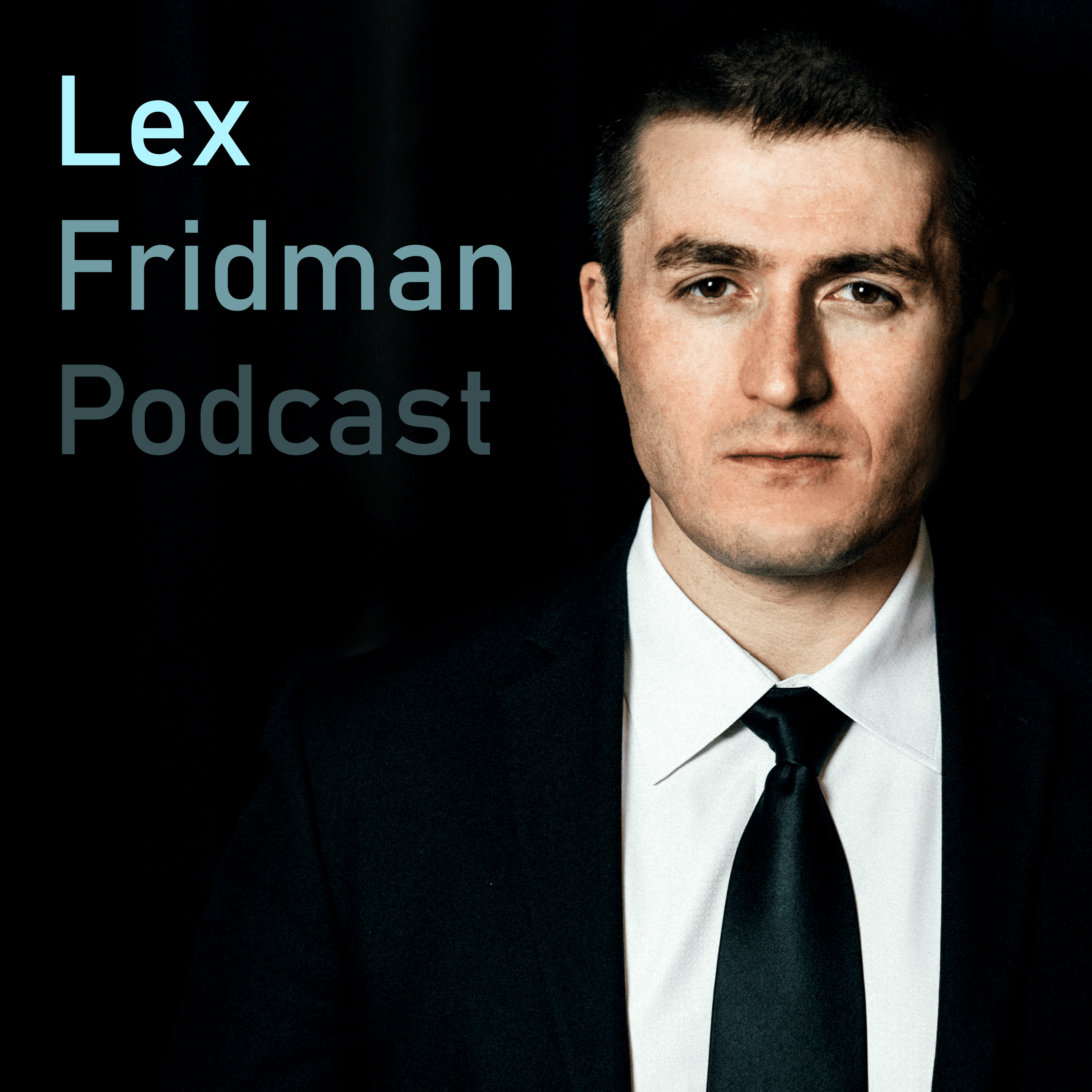
#445 – Vivek Ramaswamy: Trump, Conservatism, Nationalism, Immigration, and War
Summary
In episode #445 of the Lex Fridman Podcast, Vivek Ramaswamy discusses the evolution of conservatism in the United States, advocating for an 'America First' mentality. He critiques both progressive and current conservative movements, emphasizing the need for clarity in foundational values and the role that curiosity and empathy play in political discourse. Ramaswamy delves into controversial topics like immigration policies, bureaucratic inefficiencies, and the influence of media on public perception, particularly during elections. He argues for a reevaluation of educational institutions and the Department of Education's mission, suggesting that excessive bureaucracy has hindered innovation and accountability in governance. The conversation also touches upon foreign policy regarding the Ukraine war, nationalism as a unifying force, and the importance of honest debate in addressing societal divisions.
Key Takeaways
- 1Ramaswamy promotes a clear and unified vision for conservatism, arguing that the movement has strayed from its foundational values.
- 2He emphasizes the importance of curiosity and empathy in political discussions, suggesting these traits can help bridge ideological divides.
- 3The current bureaucratic environment is critiqued for fostering inefficiencies and deflecting accountability, with calls for significant government reform.
- 4Ramaswamy discusses the complexities of immigration policy, advocating for an approach centered on honesty and individual contributions.
- 5The podcast highlights the intertwined roles of national pride and identity, suggesting they can contribute positively to societal cohesion.
- 6Ramaswamy encourages open debate as a means to unify the nation, countering divisive narratives prevalent in today's political landscape.
- 7Concerns about the influence of media and technology on public narratives and election perceptions are raised, highlighting issues of censorship.
Notable Quotes
"As always, when the topic is politics, I will continue talking to people on both the left and the right with empathy, curiosity, and backbone. It's about understanding different views and engaging constructively."
"The division we’re seeing online, on the internet, between the politicians, is our best attempt at trying to navigate through the tension of discourse, figuring out what the hell are we doing here?"
"I believe in the intelligence of the listener to decipher the truth. And sometimes that doesn't come immediately. It comes over time."
"When it comes to discussions around health, nutrition, and all of that, I integrate the advice from all of my friends, all of the scientific literature and podcasts that's out there. But at the end of the day, I take all of that with a grain of salt, and just kind of listen to my body and see what works."
"The importance of life, liberty, and the pursuit of happiness and freedom, they didn't practice those values in terms of many of our founding fathers being slave owners, inequalities with respect to women, and other disempowered groups."
"When you take something away from somebody based on their genetics, you actually foster greater animus towards other groups around you. And so the problem with that philosophy is that it creates, there are several problems with it, but the most significant problem is to actually fan the flames of the very divisions that you supposedly wanted to heal."
"But the irony is in the name of this capital D diversity, which is creating a supposedly welcoming workplace for all kinds of Americans, by focusing only on certain kinds of so-called diversity that translates into actually not even a diversity of your genetics, which is what they claim to be solving for, but also a hostility to diversity of thought. And I think that's dangerous."
"Bureaucracy is one that looks after its own existence as its top goal, often at the expense of those it serves. This creates a systemic issue where the focus shifts away from accountability."
"You've seen this in several different spheres of American life, how bureaucracy can deflect accountability for its own failure and instead project the appearance of virtue."
"The founding fathers were pioneers, creators, and explorers who valued innovation over the bureaucratic norms of Old World England, which illustrates a fundamental American spirit that needs to be revived."
"In a true self-governing democracy, it should be our elected representatives that make the laws and the rules, not unelected bureaucrats. This is essential for restoring power to the people."
"The single greatest form of economic stimulus we could have in this country is to rescind every unconstitutional regulation that Congress never passed, effectively liberating entrepreneurship."
"Most competent people feel like that bureaucratic machine will swallow them whole. They desire a system that allows them to achieve their true potential without unnecessary hurdles."
""I think if you went to most federal bureaucracies and just asked them, like, what's the mission? I doubt somebody who works there, even the person who leads it, could give you a coherent answer to that question." This reflects the complex bureaucracy that often leaves government employees uncertain about their goals."
""Is that purpose still relevant? Is this organization at all fulfilling that purpose today? To me, those are some relevant questions to ask." This statement emphasizes the necessity for accountability and relevance of government organizations, especially in education."
""There's no evidence today of states intentionally mapping out which are the black versus white school districts and siphoning money in one direction versus another." This quote discusses the complexities faced within educational funding and challenges assumptions about racial equity in distributions."
"There are evidence of schools in the Midwest or in the Great Plains that have been denied funding because Department of Education funding is contingent on adopting certain equity goals. This can lead to a troubling cycle of inequality in educational resources."
"I think it's a great idea literally, once you get government out of education, that's achieved 75% of what I think we need to achieve, because I’m focused on solving other problems that tend to go further in the direction of true educational choice and diversity of choice."
"...we're both, we share in common a willingness to take the risk and see what happens. The challenges are great, but so are the possibilities for reforming how government operates."
"I mean, the sun will still rise in the East and set in the West. That much I guarantee you. But these basic truths often get lost in the debates surrounding federal reform and spending priorities."
"If I was to summarize my ideology in a nutshell, it is to terminate the nanny state in the United States of America in all of its forms..."
"I think it's easy to tell the tales of the financial corruption. It's a kind of cultural corruption and conceit that just because a certain number of people in that expert class have a belief, that their belief happens to be the right one because they can scare you with what the consequence would be if you don't follow their advice."
"The person who we elect to be the US president is the one that actually is the true commander in chief. I have my doubts of whether it operates that way, especially considering that Joe Biden is not acting as a functioning commander in chief."
"I don't want to replace the left-wing nanny state with a right-wing nanny state. I want to get in there and actually dismantle the nanny state. And I think it has been a long time in the United States, maybe ever in modern history, that we've had a conservative leader at the national level who makes it their principal objective to dismantle the nanny state in all of its forms."
"The combination of those two cases is seismic in its impact for the regulatory state. It's a crucial pivot point towards limiting the powers of agencies to create regulations without direct congressional support."
"I believe that he does care about dismantling that federal bureaucracy, certainly more so than any Republican nominee we have had in certainly my lifetime."
"The mass deportations of millions of illegals... should be weighed against the potential economic and humanitarian costs, demonstrating a need for sensitivity in policy creation."
"I think one of the things we gotta remember is that the people who were impacted by policies like Temporary Protective Status are often those who weren't breaking the law, revealing the intricacies of how we view legality and morality in immigration."
"There's even been discussions about the disintegration of families due to strict immigration enforcement, showcasing the human cost of an uncompromising approach to illegal immigration."
"The current immigration system selects for people who are willing to lie. That's what it does. It incentivizes dishonesty instead of civic allegiance to the United States."
"Right now, our immigration system, if it rewards one quality over any other, it is whether or not you are willing to lie. And the people who are telling those lies are the ones who are most likely to get in."
"The hard, uncomfortable truth is that many who claim asylum are not in genuine danger; instead, they are those most unwilling to be truthful about their real intentions."
"It's whether or not you're willing to lie on the application. That means you're gonna have a class populated by a bunch of charlatans and frauds."
"I want an immigration system centered on honesty. To implement that, we require acknowledging what the goals of our immigration system are in the first place."
"I think we need to have that debate in the open about whether American identity is about ideals or a physical place and a physical homeland."
""The number one factor that determines whether or not you succeed in achieving your goal is you. If I tell it to my kids and I preach it to the left, I'm going to preach that to our own side as well.""
""I actually think it is, if you were making that case... So you're asking me to steel man it? That's what I would say is that when I look at what's the number one issue that I would need to persuade independent voters.""
""I think we have seen some growth from Donald Trump over that first term in the experience of the 2020 election. You hear a lot of that on the campaign trail.""
"The fact remains that throughout 2020, many Americans felt that government actions systematically locked them down and forced them to comply with demands inconsistent with their freedoms, which fueled deeper frustration within society."
"If we're to address the threats to democracy, we need to examine not only the political narratives but also the infrastructural responses by those in power, because the reaction to systematic censorship rarely yields positive outcomes."
"When you portray someone as the antagonist and foster a culture of distrust and fear around them, you're inherently creating a narrative that can spiral into chaos, particularly if that figure causes upheaval in traditional power structures."
"A decisive victory that unites the country rewrites the path we take moving forward. It's a moment to reflect on our shared values, much akin to the significant changes that occurred in the 1980s."
"Weakening the Russia-China alliance represents a crucial national interest, as the speaker believes it's the single greatest threat we face."
""Because it's not a zero-sum game alone with Ukraine, it opens opportunities for both sides to consider different outcomes that may be beneficial to others involved in the negotiations as well." This statement underlines the complexity of international negotiations and the need for creative solutions that benefit multiple parties."
""I think reopening economic relations with the West would be a big win for Russia, but also a carrot that gets them out of that tight situation they find themselves in." This reflects the strategic thinking behind potential negotiations and the role of economic incentives."
"I think the way that you see world wars often emerge is strategic ambiguity from two adversaries who don't really know what the other side's red line is or isn't and accidentally crosses those red lines."
"I think that's the single most effective way to make sure this doesn't spiral into major world war."
"Nationalism isn't a bad word. I think nationalism can be a very positive thing if it's grounded in the actual true attributes of a nation."
"Malcolm X actually said, 'a nation without an appreciation for its history is like a tree without roots.' This quote resonates with the idea that historical consciousness is fundamental for national stability and growth."
"And I think that that's true, not just for the United States, but for every other nation. A country thrives when its people understand and appreciate their historical context, which forms the basis of cultural identity and pride."
"I think as long as you're curious about that, you know what I mean?"
"I think that that's certainly something I care to revive."
"You don’t take it personally. You don’t get emotional, sort of in a positive way, you get passionate."
"I think fundamentally most people are good. And one of the things I love most about humans is the very thing you said, which is curiosity. I think we should lean into that."
"In the country is we've gotten to this place where we've been told that stay in your lane. You know, you don't have an expert degree in that, therefore you can't have an opinion about it. I don't know."
"So I would love for you and people like you to represent the future of American politics."
Episode questions
What is "#445 – Vivek Ramaswamy: Trump, Conservatism, Nationalism, Immigration, and War" about?
In episode #445 of the Lex Fridman Podcast, Vivek Ramaswamy discusses the evolution of conservatism in the United States, advocating for an 'America First' mentality. He critiques both progressive and current conservative movements, emphasizing the need for clarity in foundational values and the role that curiosity and empathy play in political discourse. Ramaswamy delves into controversial topics like immigration policies, bureaucratic inefficiencies, and the influence of media on public perception, particularly during elections. He argues for a reevaluation of educational institutions and the Department of Education's mission, suggesting that excessive bureaucracy has hindered innovation and accountability in governance. The conversation also touches upon foreign policy regarding the Ukraine war, nationalism as a unifying force, and the importance of honest debate in addressing societ...
What are the key takeaways from "#445 – Vivek Ramaswamy: Trump, Conservatism, Nationalism, Immigration, and War"?
Ramaswamy promotes a clear and unified vision for conservatism, arguing that the movement has strayed from its foundational values. He emphasizes the importance of curiosity and empathy in political discussions, suggesting these traits can help bridge ideological divides. The current bureaucratic environment is critiqued for fostering inefficiencies and deflecting accountability, with calls for significant government reform.
Which podcast is this episode from?
"#445 – Vivek Ramaswamy: Trump, Conservatism, Nationalism, Immigration, and War" is an episode from Lex Fridman Podcast.